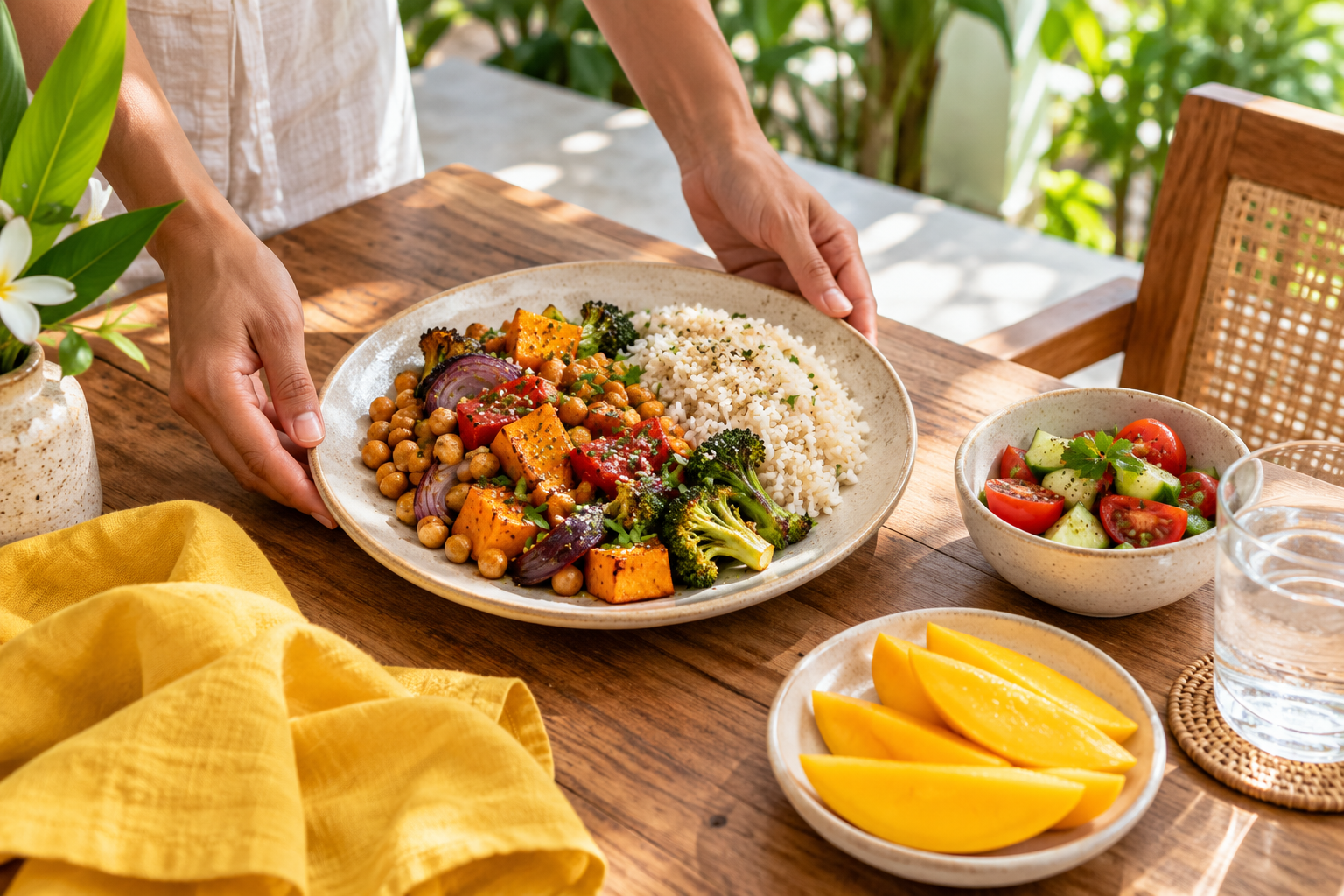
Trying new food can be one of the pleasures of living abroad. Deciding what to eat three times a day while working can feel less exciting. The answer does not have to be choosing between eating out every day and cooking exactly as you did at home.
Try building a small, flexible food routine around the place you are in. A few familiar options can leave you more energy to enjoy discovering everything else.
Check the kitchen before the suitcase
If you expect to cook, ask what is actually available: hob, fridge space, basic pans, utensils and somewhere to store dry food. “Kitchen access” does not tell you how easy it will be to prepare dinner when several other people are doing the same.
If meals are offered, ask which days and times, what a typical menu looks like, and what is included in your room price. Clarify dietary requirements directly rather than assuming that a label such as “healthy” means the same thing to everyone.
Make the first shop a small one
Choose a breakfast you enjoy, ingredients for two easy meals and something convenient for a late finish. Buy modest amounts until you know your fridge space and schedule. You can explore unfamiliar ingredients gradually without filling a kitchen you have only just arrived in.
Walk to nearby shops if practical and note their opening hours. Ask what people cook with locally available ingredients. Familiar cooking methods can work with different vegetables, grains or pulses.
Leave room for local food
Choose a few meals out that you actually want to enjoy. Ask a local resident for a recommendation and be curious about dishes you do not recognise. You do not need to turn every lunch into either a sightseeing event or a nutritional calculation.
For allergies, communicate the specific ingredients you must avoid and ask about preparation. If you have a medical dietary requirement, plan it with an appropriate professional rather than relying on general travel advice.
Use shared meals as an invitation
A shared dinner can be simple: one person makes rice, someone else brings vegetables, and everyone agrees costs and cleanup beforehand. Invite people without making attendance an obligation.
Keep a backup meal for the night when work runs late or nobody feels like cooking. Having that option can make a place feel more like home. For the wider daily rhythm, read our guide to routines that travel with you.